The Museum is Participation
Key - words
voices
inclusion
exchange
active role
collaboration
community
collectivity
co-creation
Museums are not just places to visit; they are spaces where we ourselves become part of the experience. Participation brings communities closer together, activates learning and empowers every voice. When children and young people participate, the museum becomes a place of exploration and action. Through workshops, collaborative programs, and a festival, participation becomes a source of empowerment and joy.
Together We Learn, Together We Create
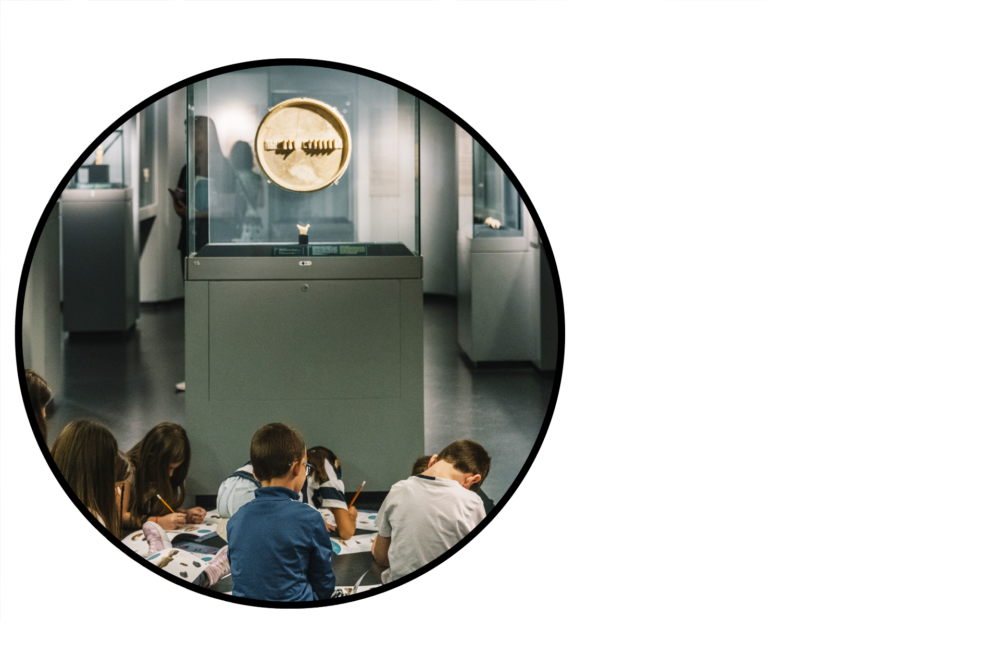
Through our educational programs, kids and adults learn through observation, conversation and action. The visit to the Museum turns into a shared experience that strengthens collaboration and creativity.
Through our educational programs, kids and adults learn through observation, conversation and action. The visit to the Museum turns into a shared experience that strengthens collaboration and creativity.
Did you know… that before being presented to the public, many of the Museum of Cycladic Art’s educational programs are first tested by museum educators?
Imagine… a museum where you decide which idea evolves into a program. Which one would you choose?
Ask an adult…what they remember most from a museum visit as a child.
At The Museum of Cycladic Art:
The Department of Learning, Impact and Public Engagement, organizes daily school tours for students of all ages, designed in alignment with the school curriculum. Through experiential tours and creative activities, children have the opportunity to explore and develop a love for the world of the Museum, in an active and engaging way. Through the program “Education for All at the Museum,” schools that would not otherwise be able to visit the Museum—due to high costs or long distances—are given the opportunity to access its facilities, contributing to the reduction of geographical and social inequalities in the field of culture.
A Museum that Welcomes Everyone
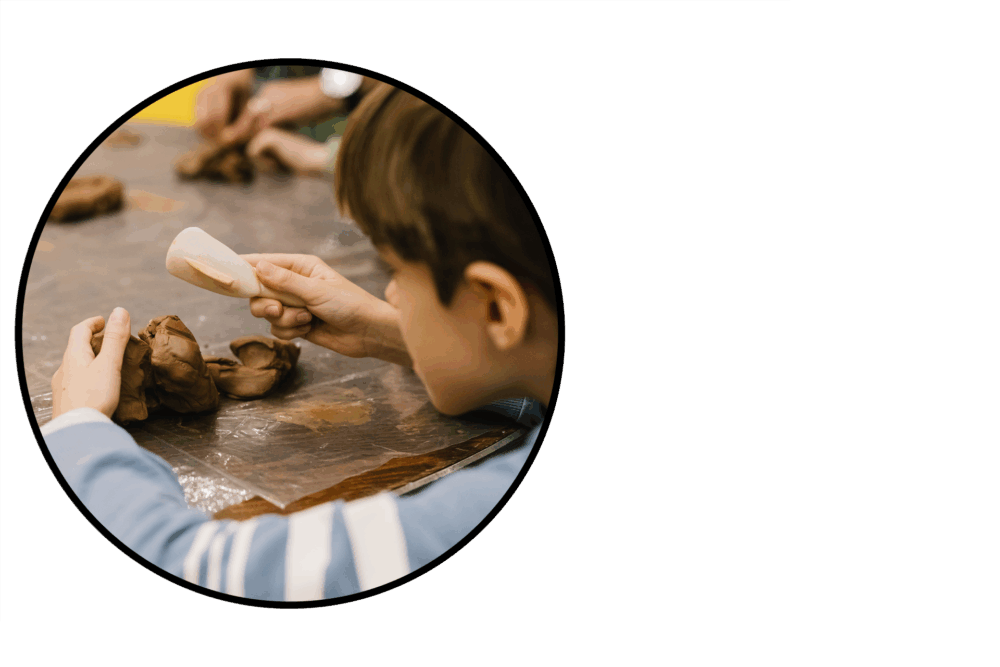
The Museum provides opportunities for people with special needs and disabilities to participate equally in accessible and inclusive activities. Art becomes a point of connection and expression.
The Museum provides opportunities for people with special needs and disabilities to participate equally in accessible and inclusive activities. Art becomes a point of connection and expression.
Did you know… that, at the Museum of Cycladic Art, there are special replicas of objects that children can touch, allowing them to experience art through touch?
Imagine… an exhibition where you can learn through sound or touch. What would it be like?
Discuss in class… a way that a museum could become more welcoming for someone with vision, hearing or mobility impairments.
At The Museum of Cycladic Art:
The Museum implements free workshops for children, adolescents (ages 5–17), and adults with disabilities or learning and developmental difficulties. The aim of the program is to ensure the equal inclusion of people with disabilities in cultural life, to promote the development of communication skills and to strengthen self-confidence through an experiential relationship with art. All of these activities emphasize the joy of participation, collaboration and the creation of a shared space for learning and freedom.
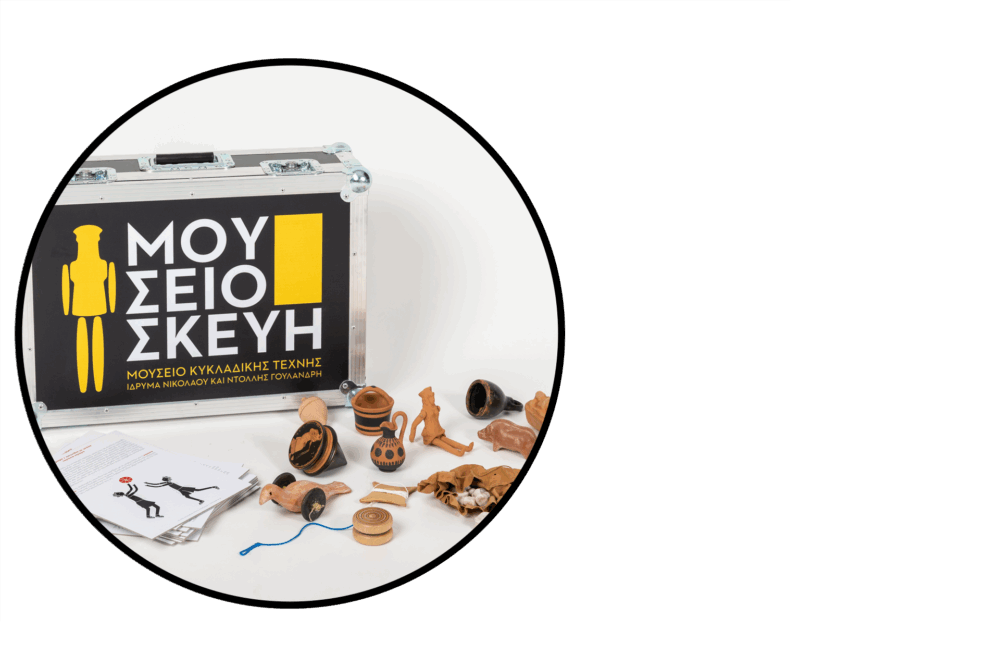
The Museum Steps into the Classroom
Museum kits travel to schools, inviting children to touch, experiment and learn actively. The classroom transforms into a space for exploration, like a mini museum that comes to life within a familiar environment.
Museum kits travel to schools, inviting children to touch, experiment and learn actively. The classroom transforms into a space for exploration, like a mini museum that comes to life within a familiar environment.
Did you know… that the Museum of Cycladic Art’s museum kits have been used in hundreds of classrooms in Greece and abroad, and that each class uses the kit in a different way?
Imagine… that the museum sends you a box, filled with objects. What would you like it to contain?
Try it in class… Create your own museum kit: each child may place an object, a drawing, or something personal inside the kit, and then collectively decide what its theme will be.
At The Museum of Cycladic Art:
Museum kits are educational suitcases that travel from school to school, in Greece and abroad. They include replica objects, educational materials, and suggestions for games and activities, covering themes such as Cycladic Civilization, ancient Greek pottery, everyday life, clothing, toys and diet in ancient Greece. Their aim is to bring children and educators closer to the world of the Museum through creative learning.
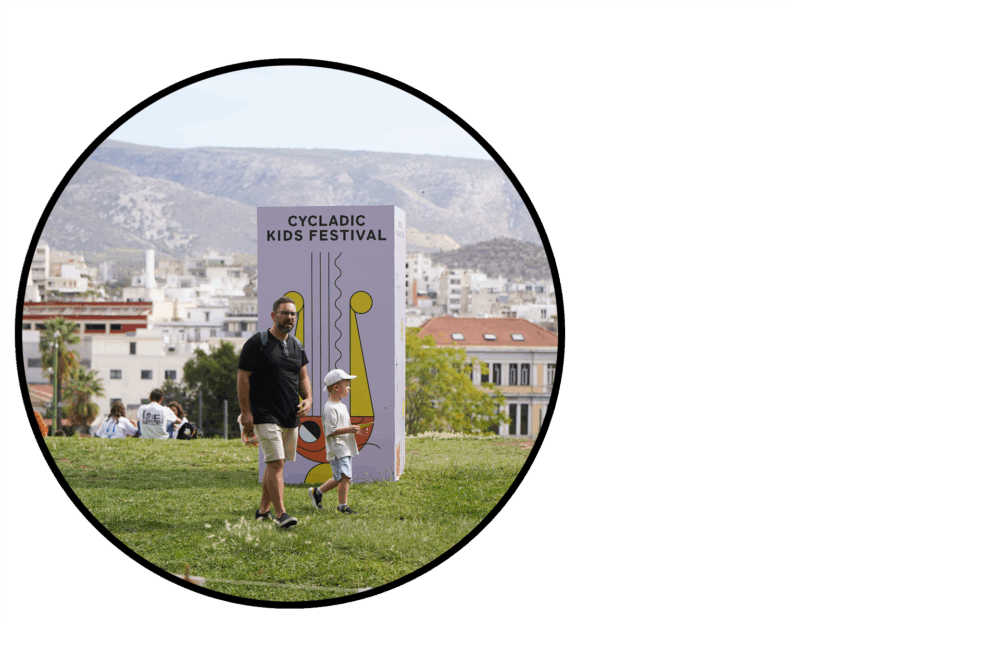
A Festival for All
At the Cycladic Kids Festival, kids and grown-ups join a fun two-day interdisciplinary event full of art, movement and creativity. Theater, music, dance, movies, storytelling and art workshops all come together to form a big celebration in the heart of Athens—and it’s always free.
At the Cycladic Kids Festival, kids and grown-ups join a fun two-day interdisciplinary event full of art, movement and creativity. Theater, music, dance, movies, storytelling and art workshops all come together to form a big celebration in the heart of Athens—and it’s always free.
Did you know… that every year, thousands of children and families explore, play and create together at the festival?
Design… an artistic activity you would like the festival visitors to try.
Discuss in class… which forms of art would you like to see at the festival and why.
At The Museum of Cycladic Art:
The Museum organizes a multidisciplinary arts festival outside the Museum space, open and accessible to all children. Theater, music, dance, cinema, visual arts, storytelling, and the largest children’s art exhibition all come together to create a dynamic weekend in the heart of Athens, dedicated to creativity, participation and joy.
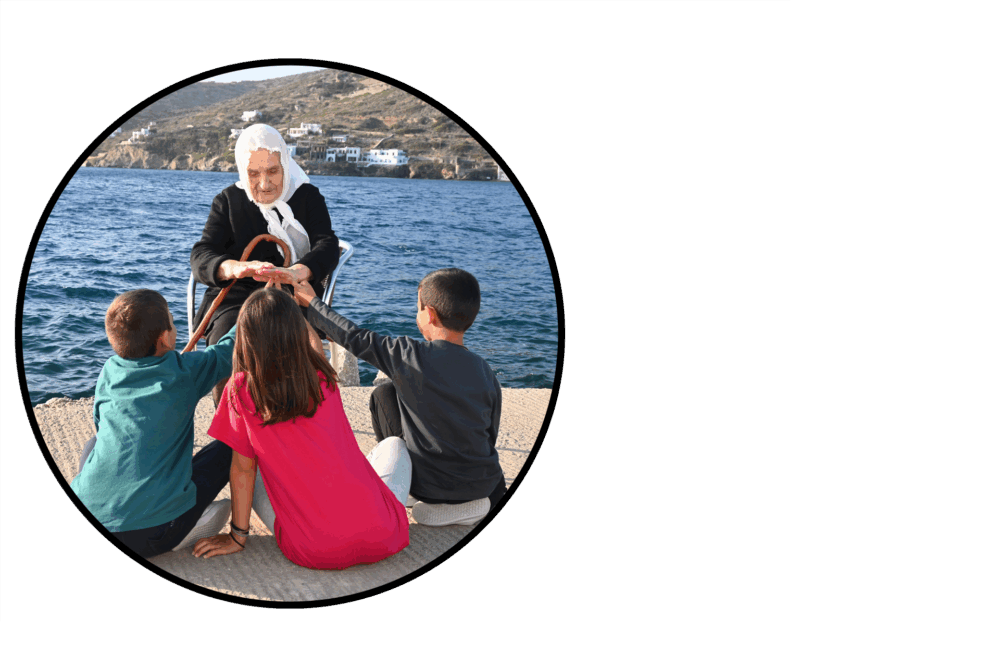
The People of the Cyclades Participate
Through various activities and collaborations on the islands, residents actively help preserve what makes their homeland unique. Cycladic Identity is an initiative that helps the communities of the Cyclades protect and showcase their cultural and natural heritage.
Through various activities and collaborations on the islands, residents actively help preserve what makes their homeland unique. Cycladic Identity is an initiative that helps the communities of the Cyclades protect and showcase their cultural and natural heritage.
Did you know… that the program has gathered stories, words, images, and sounds from the same islands—designs that portray the special Cycladic identity?
Imagine… which design from your place of origin—a word, a memory, a piece of scenery—you would choose in order to showcase what makes it special.
Design… an activity through which your class could showcase their own identity: what would it include and how could everyone participate?
At The Museum of Cycladic Art:
Cycladic Identity aims to support the Cyclades in preserving and promoting their cultural, natural, and intangible heritage, ensuring that customs and traditions—such as music, local practices, cuisine, and the storytelling of older generations—are not lost.
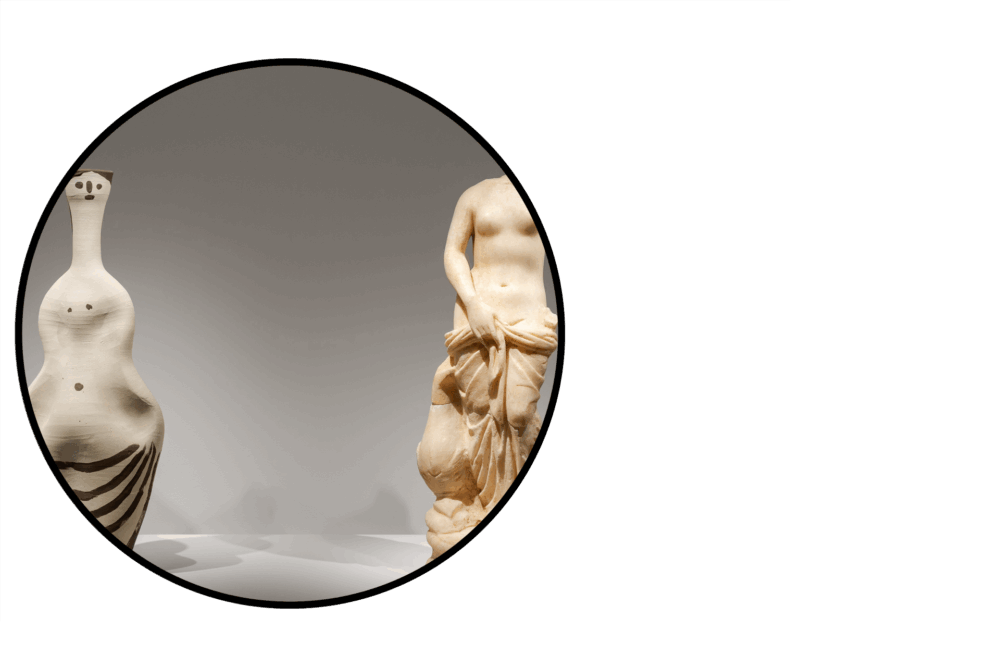
Exhibitions Turn into Dialogue
When ancient and modern artworks are displayed together, they spark a conversation that bridges different times, materials and ideas. Visitors observe, compare, interpret and actively participate, discovering how art is able to create new thoughts and connections.
When ancient and modern artworks are displayed together, they spark a conversation that bridges different times, materials and ideas. Visitors observe, compare, interpret and actively participate, discovering how art is able to create new thoughts and connections.
Did you know… that in many of the Museum of Cycladic Art’s exhibitions, curators choose to showcase a contemporary artwork next to an ancient one, to help us find new ways of looking at them?
Imagine… which ancient artwork you would like to see next to a contemporary one, and why.
Combine… and select two objects from different eras and think about the story they could tell if they were displayed alongside each other.
At The Museum of Cycladic Art:
The exhibition series Divine Dialogues brings ancient Greek art into conversation with contemporary art. A characteristic example is the exhibition Picasso and Antiquity | Line and Clay, where ceramics and drawings by Pablo Picasso were presented alongside ancient objects. Through thematic connections, the works “entered into dialogue,” showing how inspiration travels from antiquity to modern art and back again.