The Museum is Inspiration
Key - words
observation
discovery
new perspectives
interpretation
thought
connection
ideas
fantasy
creative process
A museum can inspire you when you least expect it. A detail in an object, a combination of colors, a story or a particular way of presenting something can spark ideas and open up new ways of thinking.
In a museum, there is no single “correct” way of seeing. Everyone observes, selects and connects what they see in their own way. This freedom makes the experience personal and allows space for imagination and creativity.
For younger visitors, the museum serves as a starting point for creativity. Images, questions and experiences are transformed into drawings, stories, movements or ideas, activating their creative thinking.
Drawing Inspiration from the Past
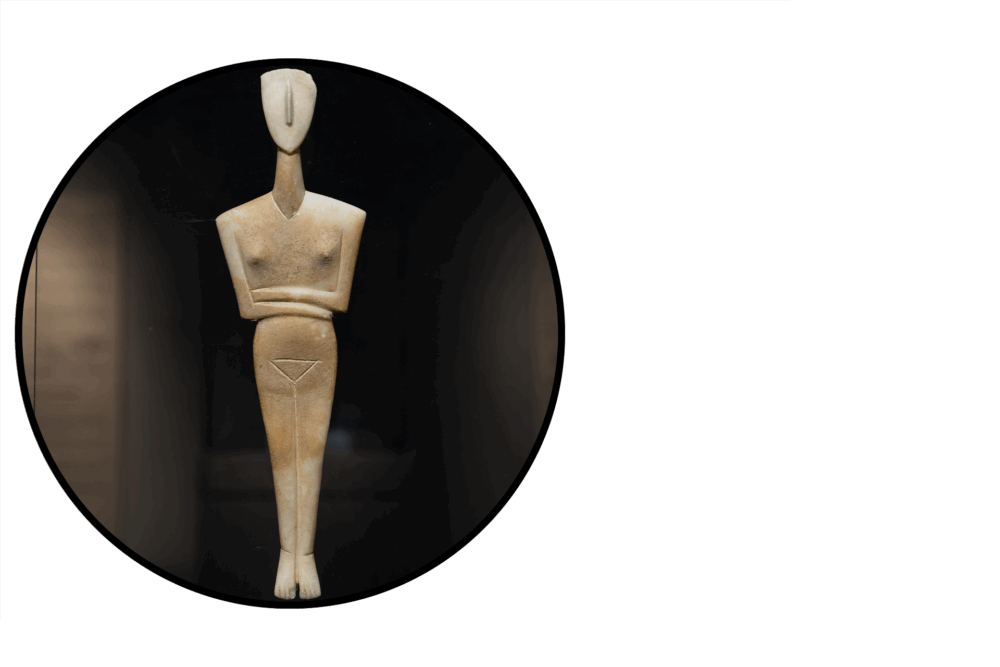
Cycladic figurines and ancient objects function as small starting points for thought. Forms, materials and traces of time help us observe how something old can inspire us today. The past does not stay behind; it becomes a source of thought, imagination and creativity.
Cycladic figurines and ancient objects function as small starting points for thought. Forms, materials and traces of time help us observe how something old can inspire us today. The past does not stay behind; it becomes a source of thought, imagination and creativity.
Did you know… that Cycladic figurines have inspired artists, architects, designers and creators across the globe?
Imagine… which detail of an ancient object could become the starting point for your own idea.
Design… a small sketch depicting an ancient object that could be transformed into something new.
At The Museum of Cycladic Art:
The Museum’s Cycladic Collection showcases a civilization from the 3rd millennium BCE, whose simple and refined forms continue to inspire us today. Cycladic figurines, marble and clay vessels, as well as tools, connect the world of people from the past with contemporary artistic explorations, demonstrating how inspiration travels through time.
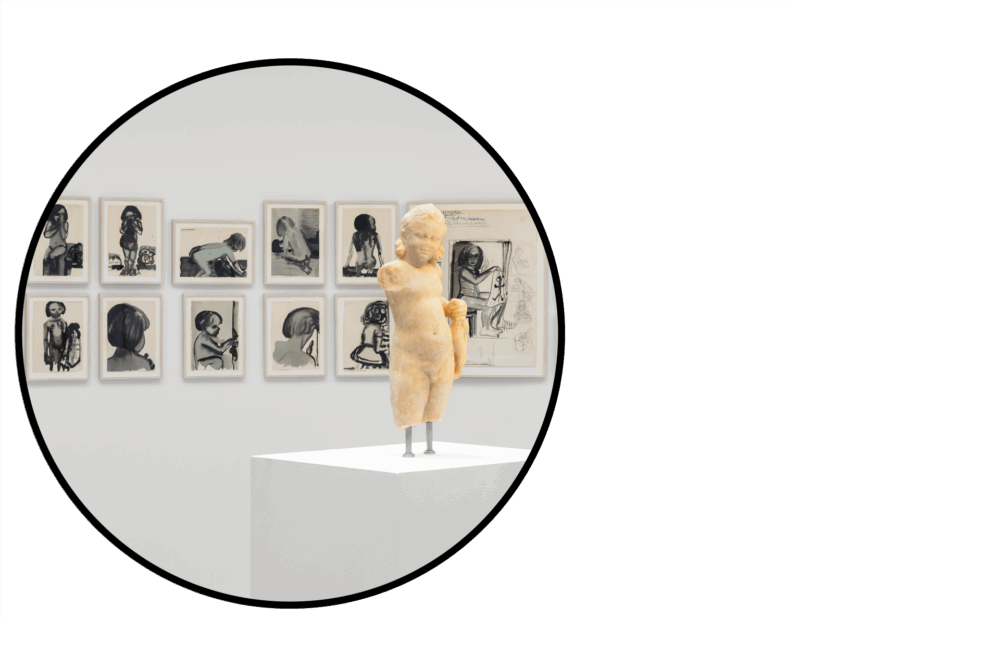
Dialogues that Generate New Ideas
When ancient and contemporary works are presented alongside each other, they spark a dialogue between eras, materials and ideas. Visitors observe, compare and discover how art can unlock new ways of thinking through their own personal perspective.
When ancient and contemporary works are presented alongside each other, they spark a dialogue between eras, materials and ideas. Visitors observe, compare and discover how art can unlock new ways of thinking through their own personal perspective.
Did you know… that in many of the exhibitions at the Museum of Cycladic Art, curators display contemporary artworks next to ancient ones, so that we may realize how our perspective on them shifts?
Imagine… which contemporary work you would place next to an ancient object, so that they can “tell” a story together.
Combine… two objects from different eras and observe how their meaning changes when they are placed side by side.
At The Museum of Cycladic Art:
One of the most distinctive voices in contemporary art, Marlene Dumas, was hosted at the Museum of Cycladic Art for her first museum exhibition in Greece. Responding to the history of representation in art as she experienced it within the Museum’s archaeological collections, Dumas personally selected the works included in the exhibition and, in a rare occurrence, also chose the fourteen archaeological objects that were displayed alongside them.
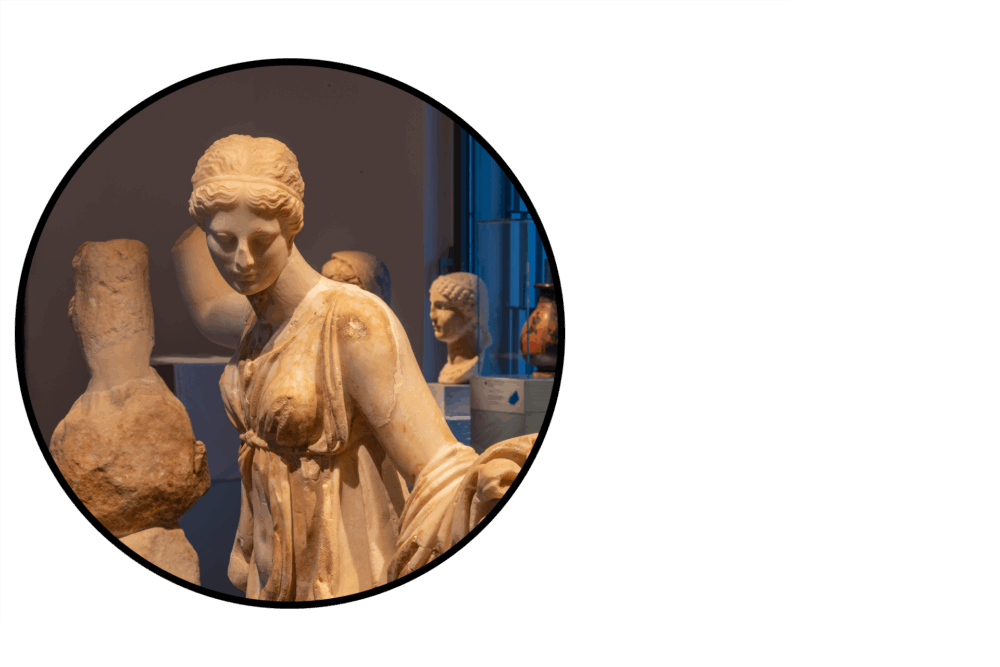
Spaces that Spark the Imagination
The setup of an exhibition can become a source of inspiration. Elements such as light, shadows and distances, as well as the path that a visitor takes, compose an atmosphere that helps us look at the works differently and often sparks new ways of thinking. This way, the space is much more than a mere exhibition area; it is an active part of the creative process.
The setup of an exhibition can become a source of inspiration. Elements such as light, shadows and distances, as well as the path that a visitor takes, compose an atmosphere that helps us look at the works differently and often sparks new ways of thinking. This way, the space is much more than a mere exhibition area; it is an active part of the creative process.
Did you know… that when a Museum of Cycladic Art exhibition travels to another museum, it is set up from scratch? The lighting and the arrangement of the works change, so the same exhibition looks completely different each time.
Discuss in class… how the experience of an artwork can change by a simple change in lighting or placement.
Observe… how an artwork can change when you look at it from a different angle or distance.
At The Museum of Cycladic Art:
The major exhibition Kykladitisses: Untold stories of women in the Cyclades, which was originally presented in Athens, was transferred to Santorini to inaugurate the renovated Archaeological Museum of Thera. The same exhibition took on a new character as it was adapted to a different space, demonstrating how the environment can shift the way we perceive the works and their stories.
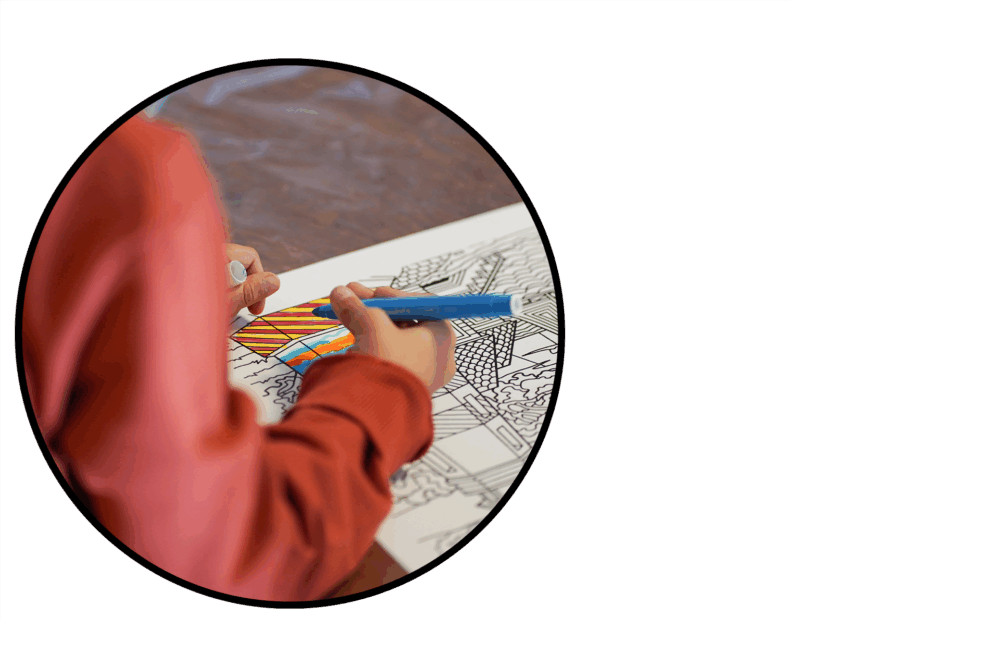
Where Ideas Take Shape
In the workshops, both inside and outside the museum, children’s ideas don’t remain mere thoughts; they turn into action. Through materials, experimentation and trial and error, participants transform their ideas into original creations. Through the workshops designed by the museum, creativity takes shape.
In the workshops, both inside and outside the museum, children’s ideas don’t remain mere thoughts; they turn into action. Through materials, experimentation and trial and error, participants transform their ideas into original creations. Through the workshops designed by the museum, creativity takes shape.
Did you know… that many workshops by the Museum of Cycladic Art use the simple observation of an artwork as their starting point and result in entirely unexpected creations?
Remember… a workshop that you took part in and that you particularly enjoyed. Describe it to the rest of the class and suggest how you could implement it together.
Create all together… an “idea wall,” on which everyone places a small design or word that they thought of while looking at an artwork.
At The Museum of Cycladic Art:
Every weekend, children and parents take part in visual arts workshops, storytelling sessions and interactive tours, designed for different age groups. The children’s program draws inspiration from ancient and contemporary games, encourages experimentation and fosters collaboration. During the workshops, children observe works of art, get familiarized with artists and artistic movements, draw inspiration from them, and try creating in their own way.
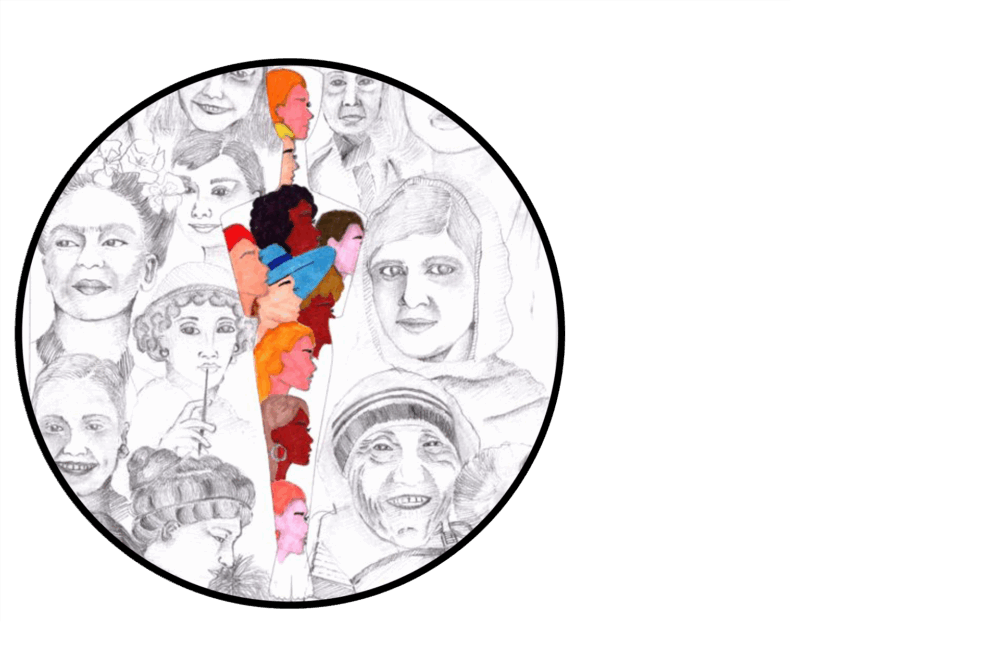
When Kids Inspire the Museum
Children’s creativity has the power to change the way we experience art. Every year, hundreds of children are inspired by the exhibits of the Museum of Cycladic Art; by nature, stories and their own emotions, creating works that stun us with their freshness and imagination. These ideas don’t stay on paper; they often open up new avenues of thought, and influence the way the museum designs its activities and experiences for the public.
Children’s creativity has the power to change the way we experience art. Every year, hundreds of children are inspired by the exhibits of the Museum of Cycladic Art; by nature, stories and their own emotions, creating works that stun us with their freshness and imagination. These ideas don’t stay on paper; they often open up new avenues of thought, and influence the way the museum designs its activities and experiences for the public.
Did you know… that the idea for the Cycladic Kids Festival originated from the works first created as part of the International Kids’ Art Contest? The children’s ideas inspired the team of the Museum of Cycladic Art to create an entire festival dedicated to children’s creativity.
Imagine… If a museum were to ask you for inspiration for a new activity, what would you suggest first?
Discuss in class… how children’s ideas could change or inspire a cultural institution.
At The Museum of Cycladic Art:
The International Kids’ Art Contest began in 2013 and is open to children ages 4–15, from preschool through middle school, as well as students in special education schools. Children participate independently or through their schools, expressing their imagination through painting, while also getting to know the world of the Museum. The competition attracts international participation, with children from Greece and abroad taking part, and is supported by Greek schools, embassies and consulates, providing ample space for every child’s voice and creativity to blossom.
Inspiration that Comes from the Community
Inspiration is not only sparked from exhibitions, but also through people’s stories. Through the Museum’s social programs, different groups come together, to share experiences and everyday stories, and to create collaboratively. The voices of the participants serve as a starting point for new ideas, activities and interactions, demonstrating how art can serve as a common space for communication.
Inspiration is not only sparked from exhibitions, but also through people’s stories. Through the Museum’s social programs, different groups come together, to share experiences and everyday stories, and to create collaboratively. The voices of the participants serve as a starting point for new ideas, activities and interactions, demonstrating how art can serve as a common space for communication.
Did you know… that many social programs at the Museum of Cycladic Art are designed based on the real stories of children, families and communities who have participated in the Museum’s activities?
Think about… which personal experience of yours could become the idea for a workshop or activity at the Museum.
Discuss in class… how everyday life stories can inspire art and creativity.
At The Museum of Cycladic Art:
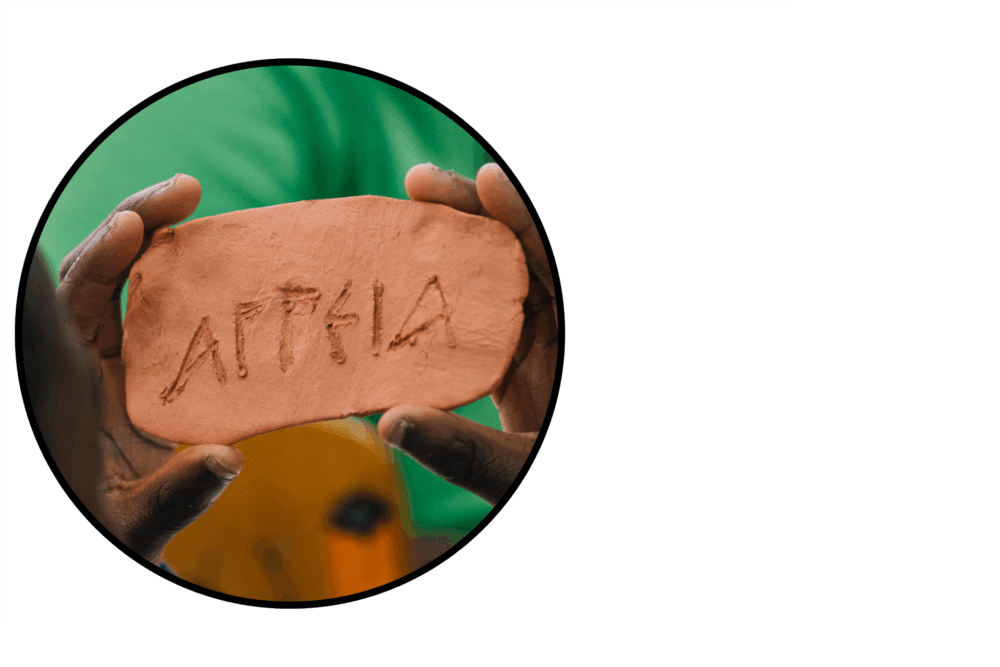
In 2016, the Museum hosted intercultural educational workshops for refugees—mainly unaccompanied children—and Greek students. Children of different origins, languages and cultural backgrounds collaborated using Cypro-Minoan script as a shared code for communication through art. The aim of the program was to promote coexistence and collaboration, to create a shared experience, as well as to introduce children to the concept of the Museum as an open and welcoming cultural space.